LUMBINI – “The Bbirth Place of Buddha”
This 8-day Buddhist heritage journey connects the spiritual landmarks of Kathmandu with the sacred birthplace of Lord Buddha in Lumbini. The journey explores Swayambhunath, Boudhanath, Pharping, Patan, ancient Kapilavastu and the archaeological remains associated with Siddhartha Gautama’s early life. In Lumbini, discover the Mayadevi Temple, Ashoka Pillar, Sacred Garden, World Peace Pagoda and international monasteries representing diverse Buddhist traditions. The tour also continues to scenic Pokhara for mountain views and cultural sightseeing before returning to Kathmandu for a farewell evening.
TOUR ITINERARY
A day-by-day breakdown of your journey through LUMBINI – “The Bbirth Place of Buddha”.
Day 1
Arrival In Kathmandu
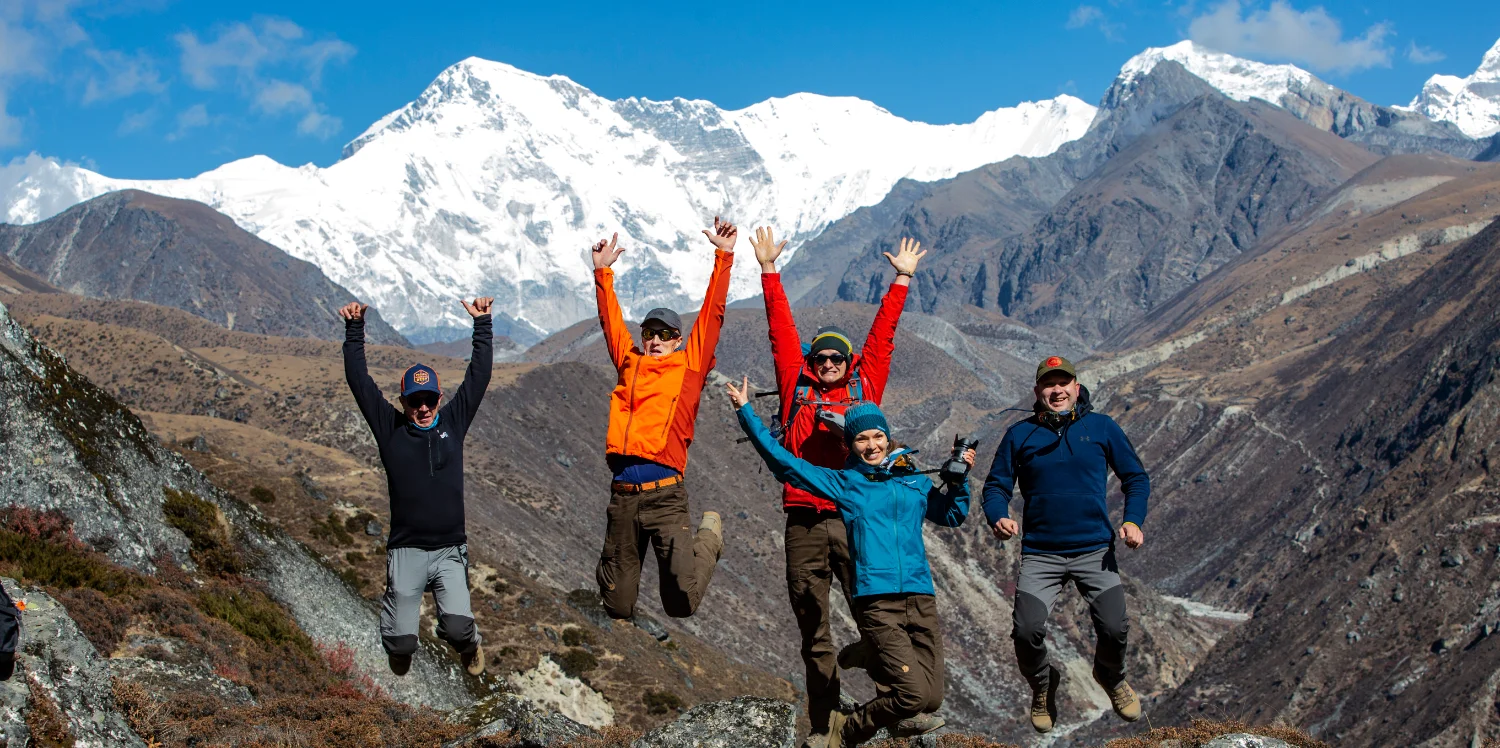
Upon arrival at Tribhuvan International Airport, meet your guide and transfer to your 3-star hotel. After refreshments and some rest, visit Swayambhunath Stupa, one of Nepal’s oldest and most revered Buddhist sites. The hilltop stupa is traditionally connected with the legend of a self-manifested lotus that once bloomed in Kathmandu Valley’s ancient lake. Historically, the site developed as an important Buddhist center over many centuries. Explore the stupa, shrines, prayer wheels and monasteries while enjoying panoramic views across Kathmandu Valley. Overnight: 3-star hotel in Kathmandu.
Day 2
Pharping – Patan Durbar Square – Boudhanath
After breakfast, drive south to Pharping, an important Buddhist pilgrimage area associated with Guru Padmasambhava and Tibetan Buddhist traditions. Visit the sacred Asura Cave and surrounding monasteries before continuing to Patan. Explore Patan Durbar Square and its remarkable Newar Buddhist heritage, including the Golden Temple, Rudravarna Mahavihar and the Thousand Buddha Temple. Later, visit Boudhanath, whose enormous mandala-shaped stupa has served Buddhist pilgrims and traders for centuries. Circumambulate the stupa and observe devotees, prayer wheels, monasteries and traditional Buddhist rituals. Overnight: 3-star hotel in Kathmandu.
Day 3
Kathmandu – Lumbini – Sacred Garden
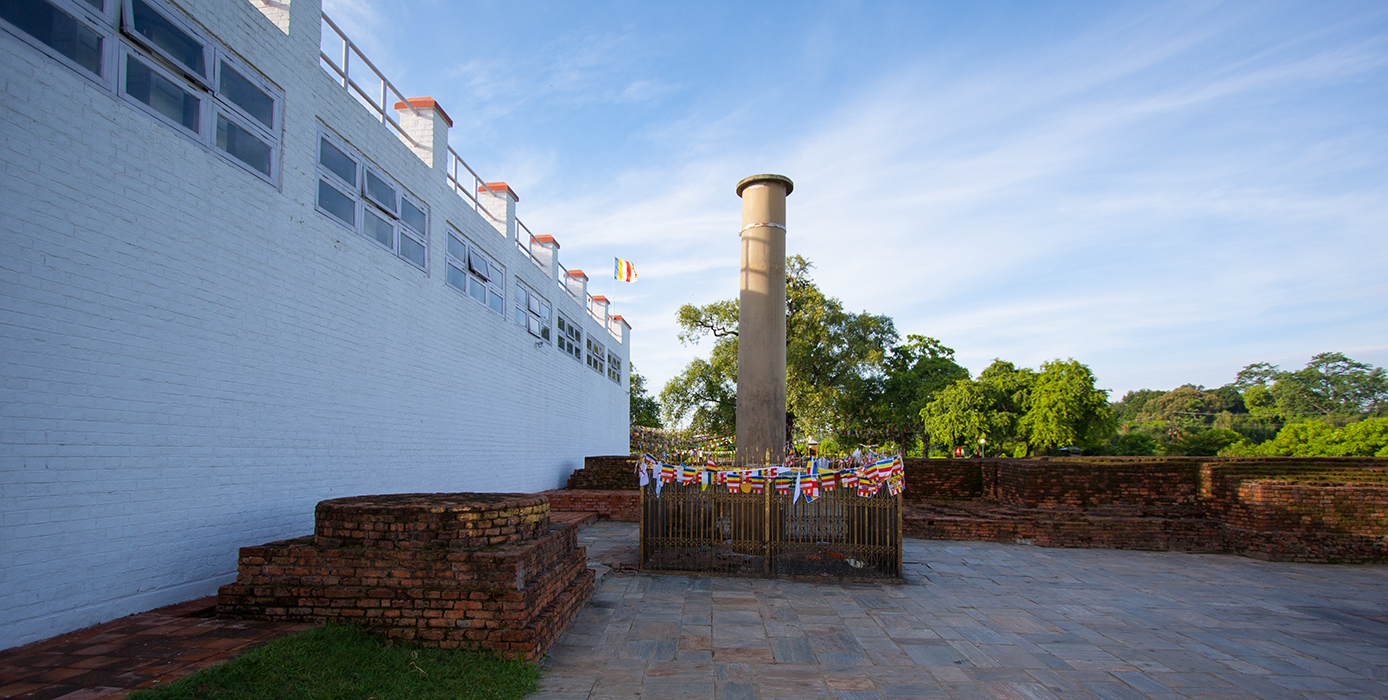
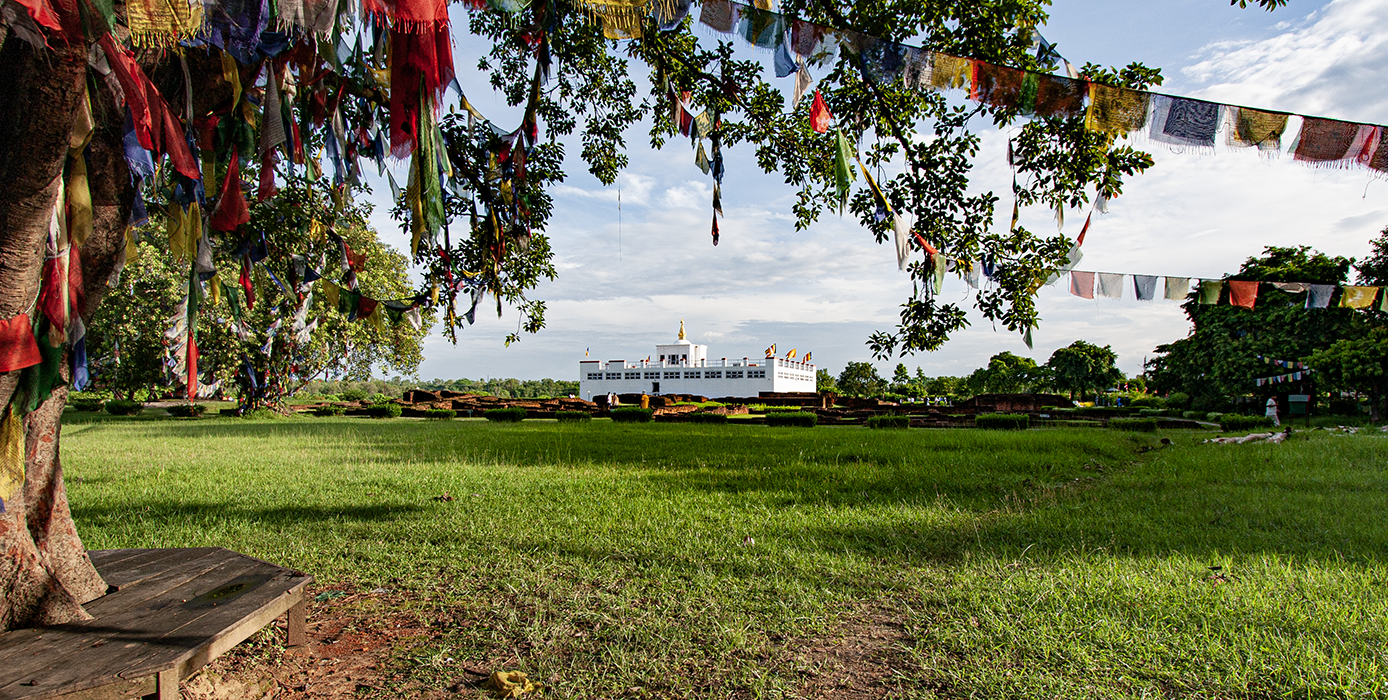
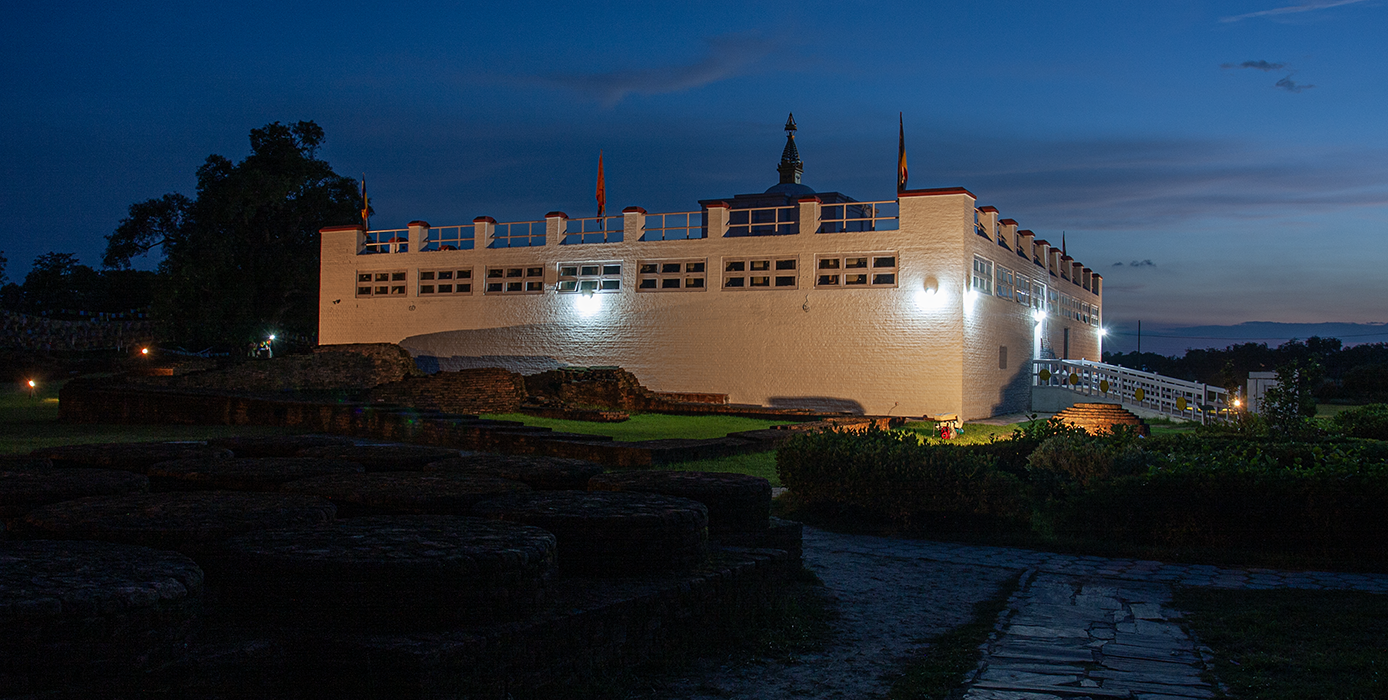
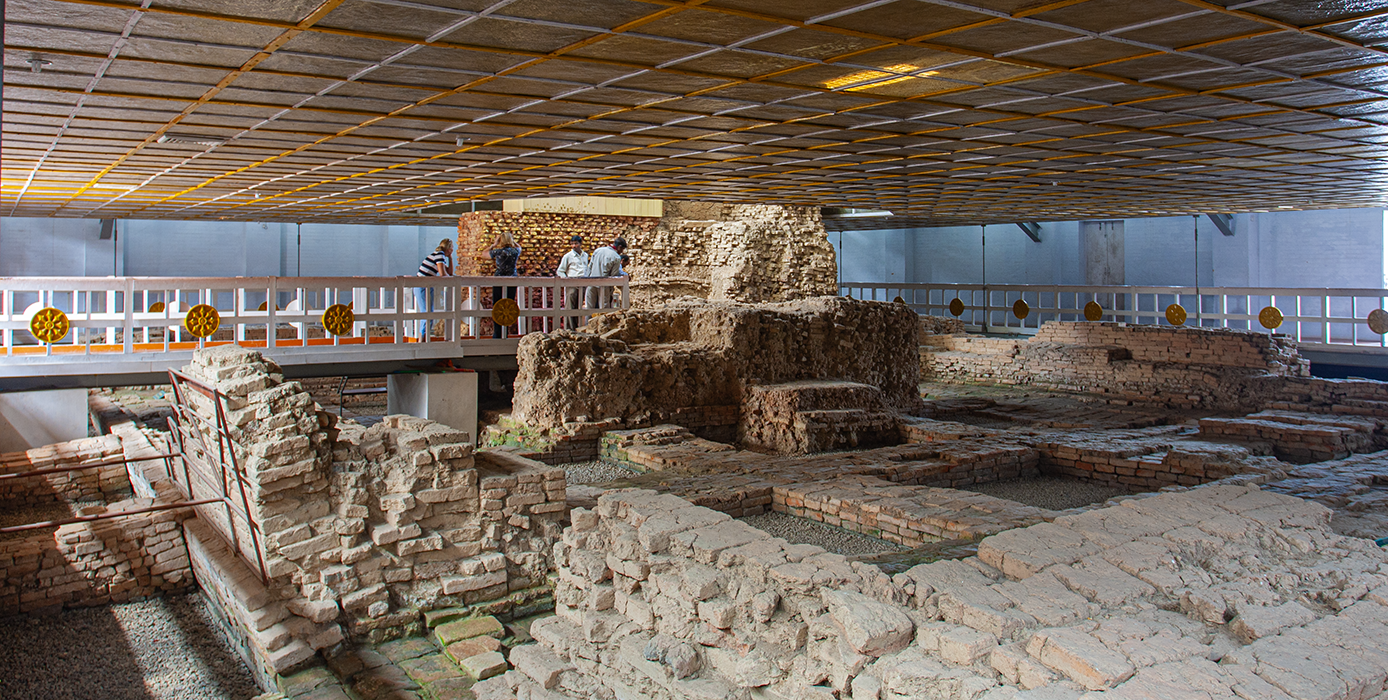
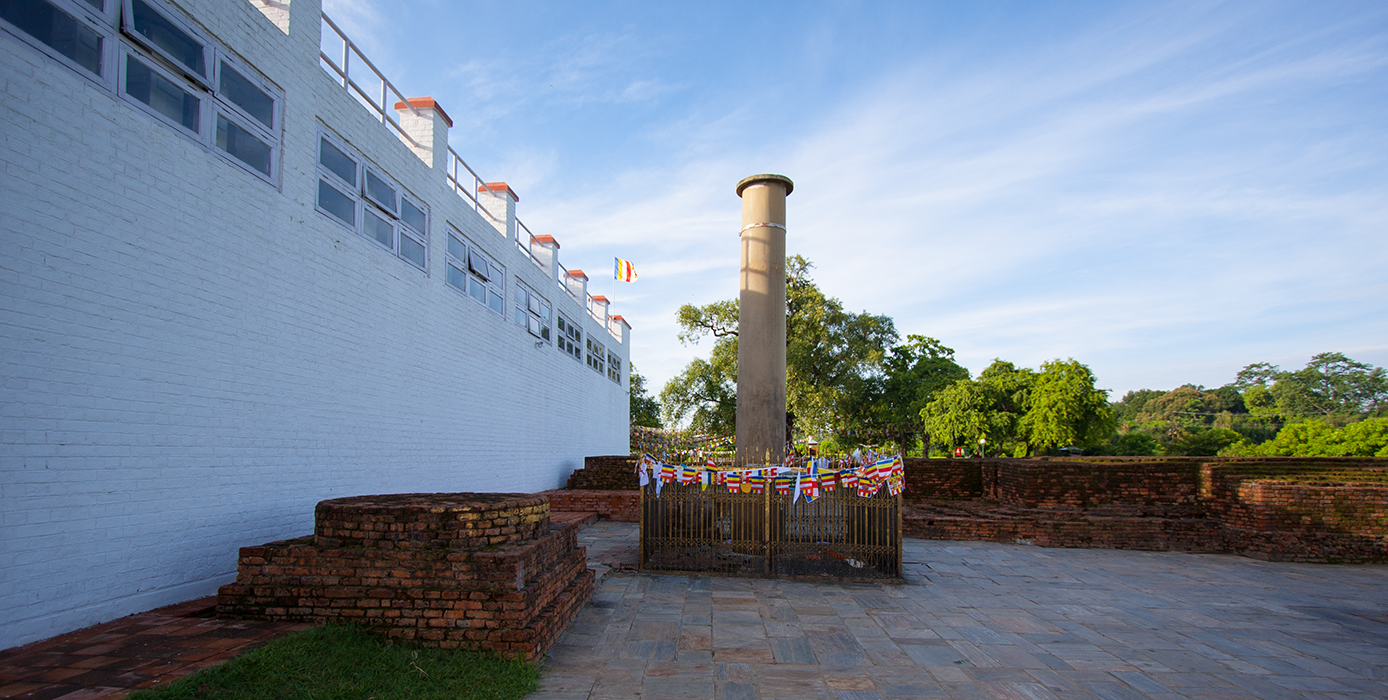
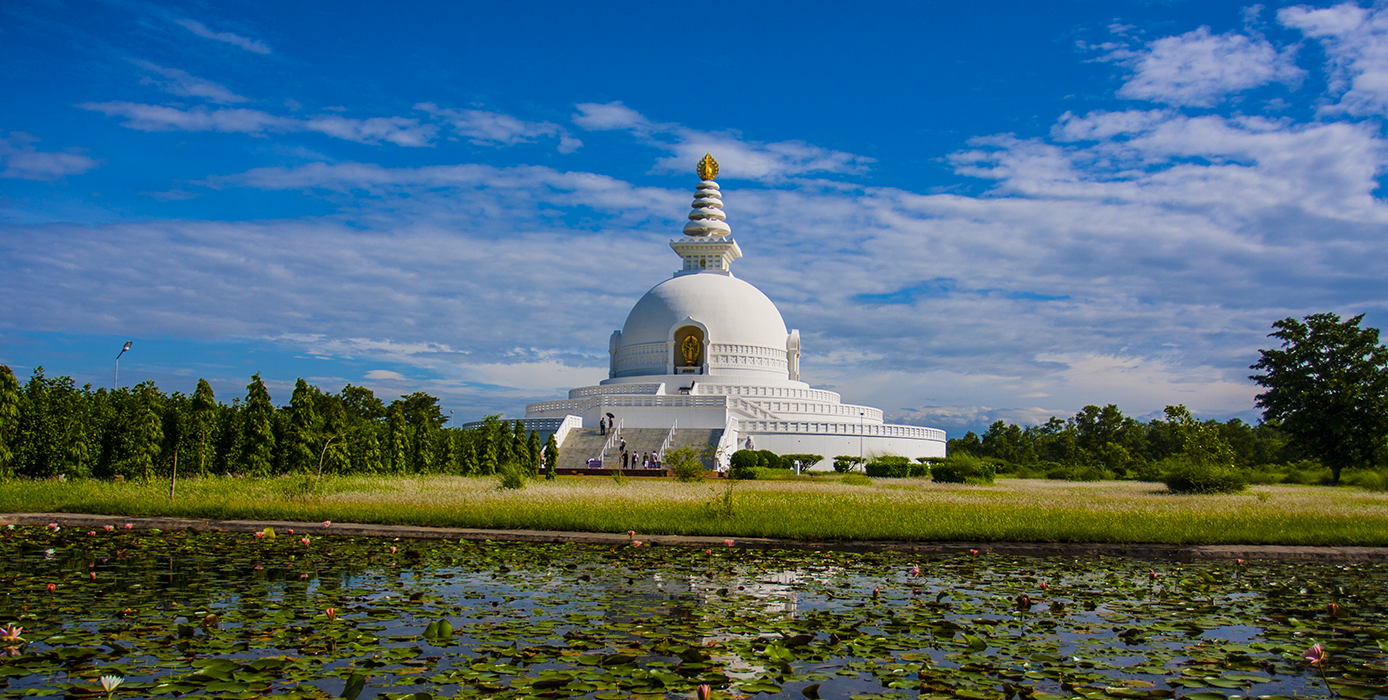
After breakfast, drive by comfortable air-conditioned car toward Lumbini, passing through Nepal’s changing landscapes from the central hills toward the hot southern plains. Lumbini is traditionally believed to be where Queen Maya Devi gave birth to Siddhartha Gautama around the sixth century BCE. According to Buddhist tradition, she grasped a branch of a sal tree while giving birth. After hotel check-in, visit the Mayadevi Temple, Sacred Garden, Ashoka Pillar, World Peace Pagoda and selected international monasteries. Overnight: 3-star hotel in Lumbini/Bhairahawa.
Day 4
Lumbini – Kapilavastu – Lumbini
Today, travel to the ancient Kapilavastu area, traditionally associated with the Shakya kingdom where Prince Siddhartha spent his early years before renouncing his royal life. Visit Tilaurakot, identified by archaeologists as an important ancient settlement and commonly associated with the historical Kapilavastu. Explore the archaeological remains, ancient structures and nearby Buddhist sites while your guide explains the history and traditions connected with Siddhartha’s life. Return to Lumbini/Bhairahawa in the afternoon and enjoy a relaxed evening in the peaceful surroundings of the pilgrimage center. Overnight: 3-star hotel in Lumbini/Bhairahawa.
Day 5
Lumbini – Pokhara – Phewa Lake
After breakfast, drive from Lumbini to Pokhara through Nepal’s changing landscapes, following rivers, valleys, villages and terraced hills. Pokhara provides a refreshing contrast to the hot plains of Lumbini, with a cooler lakeside environment and spectacular mountain scenery. Upon arrival, check into your 3-star hotel and take some time to relax. Later, enjoy a peaceful boating experience on Phewa Lake. Visit Tal Barahi Temple, situated on an island in the lake, and enjoy views of the surrounding hills and, weather permitting, the Annapurna and Machhapuchhre ranges. Overnight: 3-star hotel in Pokhara.
Day 6
Sarangkot – Pokhara Sightseeing
Rise early for a visit to Sarangkot, either by vehicle or through an optional short hike, to witness sunrise over the Himalayan range. On clear mornings, Annapurna, Dhaulagiri, Machhapuchhre and surrounding peaks create an impressive panorama. Return to Pokhara for breakfast before visiting Davis Falls and Gupteshwor Mahadev Cave. The cave is associated with Hindu religious traditions and lies close to the waterfall. Continue to the World Peace Pagoda, built as a symbol of peace and harmony, offering beautiful views across Phewa Lake, Pokhara Valley and the mountains. Overnight: 3-star hotel in Pokhara.
Day 7
Pokhara – Kathmandu – Farewell Dinner
After breakfast, drive back to Kathmandu along the scenic Prithvi Highway. The route follows rivers and winding mountain roads through traditional settlements, terraced farmland and green hills. On arrival, check into your 3-star hotel and enjoy free time for shopping, relaxing or exploring nearby Thamel. In the evening, gather for a farewell dinner at a fine restaurant in Thamel. Enjoy traditional Nepali cuisine and, subject to availability, a cultural performance celebrating Nepal’s diverse traditions and bringing the Buddhist heritage journey to a memorable conclusion.
Overnight: 3-star hotel in Kathmandu.
Day 8
Optional Mountain Flight – Departure
Early morning, enjoy an optional mountain flight from Kathmandu for spectacular aerial views of Mount Everest and the Himalayan range, weather permitting. Return to the hotel and have breakfast before completing your final preparations. Depending on your departure schedule, you may have some free time for last-minute shopping or relaxation. Check out from the hotel and your guide will transfer you by air-conditioned car to Tribhuvan International Airport for your onward flight. Your memorable journey through Nepal’s Buddhist heritage, sacred landscapes and cultural treasures concludes today.
COST DETAILS
What is Included
3-star hotel accommodation throughout the tour.
Daily breakfast at the hotels.
Accommodation based on twin/double sharing.
Transportation by comfortable air-conditioned private car throughout the itinerary.
Airport arrival and departure transfers.
Experienced English-speaking licensed guide.
All entrance fees for the sightseeing places mentioned in the itinerary.
Lumbini and Kapilavastu sightseeing with guide assistance.
Phewa Lake boating.
Farewell dinner in Kathmandu.
Government taxes and applicable service charges.
Not Included
International airfare and Nepal visa fee.
Travel insurance and medical expenses.
Optional mountain flight.
Lunches and dinners except the farewell dinner.
Personal expenses such as laundry, telephone calls, drinks and shopping.
Tips for guide and driver.
Any sightseeing or activities not mentioned in the itinerary.
Expenses arising from flight delays, road closures, natural disasters or circumstances beyond our control.
Visit Lumbini, the UNESCO World Heritage Site traditionally recognized as the birthplace of Siddhartha Gautama, the Buddha.
Explore Mayadevi Temple, Ashoka Pillar and the Sacred Garden, central landmarks of Buddhist pilgrimage.
Discover Kapilavastu and Tilaurakot, associated with Buddha’s childhood and the ancient Shakya kingdom.
Enjoy Pokhara, Phewa Lake, Sarangkot sunrise and Himalayan panoramas, combining spiritual heritage with Nepal’s natural beauty.
Book Your Trek
This trek is available year-round — complete your details below and our team will contact you to confirm your preferred travel dates.
Important:
HEALTH: A visit to Nepal generally does not require special vaccinations, but we recommend consulting your doctor before departure, particularly if you have existing medical concerns or are taking regular medication. Carry sufficient personal medicines and a small personal first-aid kit. Medical facilities are more limited outside major cities, particularly around rural and archaeological areas.
The Lumbini and Kapilavastu region lies in Nepal’s southern Terai and can become very hot and humid, especially from late spring through the summer months. Stay well hydrated, use sun protection and avoid prolonged exposure to direct sunlight during the hottest part of the day.
If you wear glasses, carrying a spare pair is advisable.
WEATHER: This journey passes through several climatic zones. Kathmandu and Pokhara are generally milder, while Lumbini and Kapilavastu can be considerably hotter, particularly during April–June and the warmer parts of the monsoon season.
Lumbini is situated in the Terai plains, where daytime temperatures can become high and humidity may be uncomfortable. Early morning and late afternoon are generally more comfortable for outdoor sightseeing.
The monsoon season can bring heavy rain, especially from June to September. Roads may become wet or delayed, so a flexible attitude is recommended. Weather can also change quickly in Pokhara and the Himalayan foothills.
PACKING: Pack lightweight, breathable and comfortable clothing for Lumbini and Kapilavastu, where the climate can be hot. Cotton or moisture-wicking shirts, loose trousers, comfortable walking shoes, a wide-brimmed hat and sunglasses are highly recommended.
A refillable water bottle, sunscreen, insect repellent, umbrella or lightweight rain jacket will be useful. Carry a small daypack for daily sightseeing.
For visits to temples, monasteries and sacred areas, bring modest clothing covering the shoulders and knees. Easy-to-remove shoes are convenient because some religious sites require visitors to remove footwear.
For Kathmandu and Pokhara, carry a light jacket or sweater, particularly during cooler mornings and evenings. The basic principle of packing is comfort rather than luxury.
Avoid unnecessary heavy luggage. A power bank can be useful during long sightseeing and driving days.
SUN, HEAT AND HYDRATION: Because Lumbini and Kapilavastu are located in the southern plains, heat management is especially important. Drink water regularly rather than waiting until you feel thirsty. Oral rehydration salts can be useful during very hot weather or after excessive sweating.
Use sunscreen regularly and protect your head and neck from direct sunlight. Take breaks in shaded areas and avoid strenuous walking during the hottest hours. Your guide can adjust the sightseeing pace when necessary according to local weather conditions.
RELIGIOUS SITES AND LOCAL CUSTOMS: Lumbini is an active Buddhist pilgrimage destination visited by people from around the world. Please maintain a respectful attitude at temples, monasteries, archaeological sites and meditation areas.
Dress modestly, follow photography instructions and avoid disturbing people during prayer or meditation. Some temples require shoes to be removed before entering. Always ask permission before photographing monks, pilgrims or local residents closely.
EMERGENCY AND YOUR SUPPORT TEAM: Our guides are trained to provide basic first aid and assist travelers in common travel-related situations. Every group is equipped with a basic first-aid kit, and we strongly recommend that every traveler have comprehensive travel insurance before coming to Nepal.
Please keep a copy of your insurance policy and emergency contact information accessible. If a serious emergency occurs, we will arrange appropriate assistance and, where necessary, help coordinate transportation to a suitable hospital or medical facility.
Trek FAQs
Lumbini is traditionally recognized as the birthplace of Siddhartha Gautama, who later became known as the Buddha. It is one of the world’s most important Buddhist pilgrimage destinations.
Yes. Lumbini is in Nepal’s Terai plains and can become quite hot, particularly in late spring and summer. Lightweight clothing, water, sunscreen and a hat are strongly recommended.
Kapilavastu is traditionally associated with the Shakya kingdom and the early life of Prince Siddhartha. Tilaurakot is an important archaeological site commonly associated with ancient Kapilavastu.
Yes. Lumbini welcomes visitors of all faiths and backgrounds. Visitors can explore the temples, monasteries, archaeological areas and Sacred Garden while respecting Buddhist customs.
The tour is generally easy and suitable for most travelers. There is considerable sightseeing and driving, with optional walking/hiking activities at places such as Sarangkot. The pace can be adjusted according to your needs.
October to March generally offers comfortable conditions for visiting Lumbini and the other destinations. April and May can be hot, while June to September brings monsoon rains. The tour can operate year-round with appropriate preparation.
We're Associated With