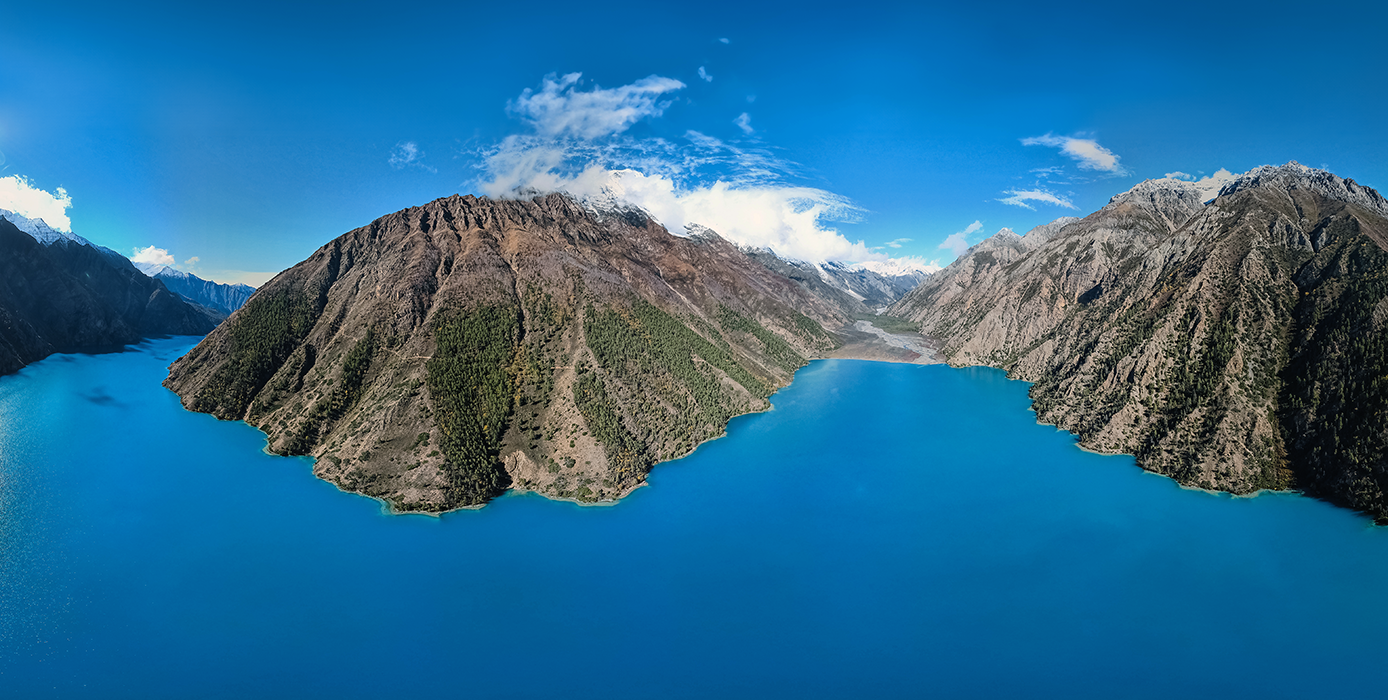
Western Nepal: The Wild Side of Nepal Most Travelers Never See
Beyond Everest and Annapurna lies another Nepal—remote, rugged, deeply traditional, and almost untouched by mass tourism.
When people hear the word Nepal, they usually think of Mount Everest, the Annapurna Circuit, colorful prayer flags, trekking lodges, and busy mountain trails.
Those places are spectacular, but they are only part of Nepal.
Far to the west lies a different world.
A world of enormous empty valleys, turquoise Himalayan lakes, ancient villages, high mountain passes, dramatic cliffs, monasteries, yak caravans, and landscapes that seem to continue forever.
This is Western Nepal.
And if there is one region that represents the wild heart of western Nepal, it is Dolpo.
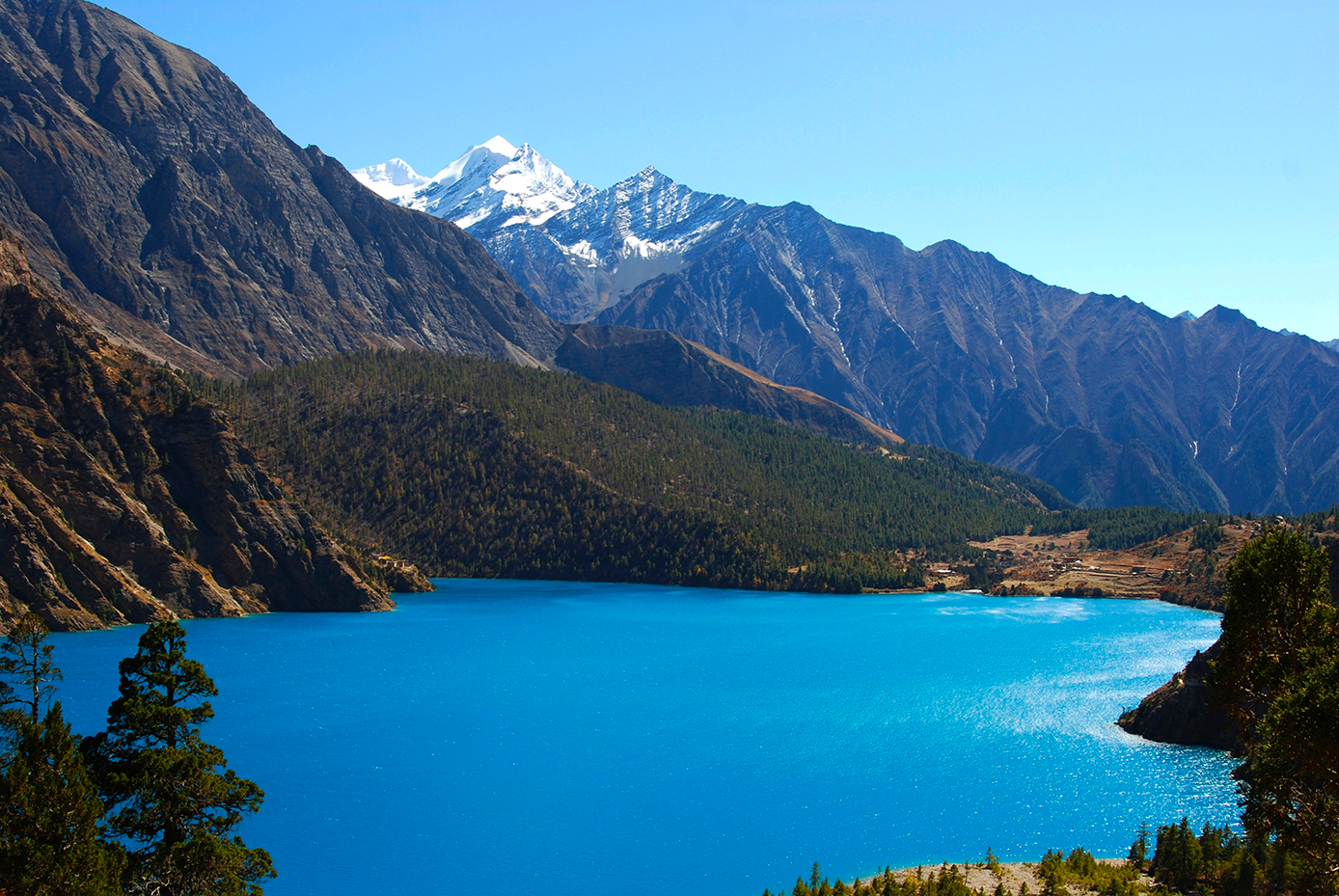
Dolpo: Nepal's Hidden Himalayan World
Dolpo lies in northwestern Nepal, inside and around the vast landscape of Shey-Phoksundo National Park.
It is a place where geography has protected culture.
High mountains, difficult passes and long distances have kept many parts of Dolpo isolated from the rapid development seen elsewhere in Nepal. Traditional villages, Buddhist monasteries, ancient trails and mountain lifestyles remain an important part of the region.
Shey-Phoksundo National Park covers about 3,555 square kilometers, making it Nepal's largest national park. Its landscape ranges from forested valleys to high, dry alpine terrain, and the park is home to animals including Himalayan tahr, musk deer, Himalayan black bear and, in the higher regions, the elusive snow leopard.
But statistics do not really explain Dolpo.
To understand Dolpo, you have to walk there.
You have to hear the river running through a silent valley.
You have to watch clouds move across enormous mountains.
You have to walk past stone houses with prayer flags fluttering above them.
And you have to experience the strange feeling of realizing that you may be one of only a handful of travelers in an enormous landscape.
That is Dolpo.
Why Do So Few People Visit Western Nepal?
This is perhaps the most interesting question.
Why, when Nepal is one of the world's greatest trekking destinations, do so few people travel to its western Himalayas?
The answer is simple: Western Nepal is difficult.
The famous trekking regions have established infrastructure. There are regular flights, roads, teahouses, restaurants, shops, trekking agencies and well-known itineraries.
Dolpo requires more patience.
Flights into the mountains can be affected by weather. Some routes involve camping. Distances between settlements can be considerable, and several areas require special permits.
For a travel agency trying to sell a short holiday, Everest or Annapurna can be much easier to explain.
"Go west into Dolpo for several weeks, cross remote mountain passes, camp in isolated valleys and be prepared for unpredictable weather" is a very different product.
But for the traveler who wants something beyond the usual tourist experience, that difficulty becomes the attraction.
The fewer people who go, the more wilderness you find.
Starting the Journey: Kathmandu to Dolpo
For most international travelers, the adventure begins in Kathmandu.
Kathmandu is where you make your final preparations, organize your permits, meet your trekking team and check your equipment.
Then you leave the capital behind.
A common approach to Shey-Phoksundo National Park is to travel toward Nepalgunj and then continue by air to Juphal, the gateway to Dolpa. Nepal Tourism Board describes access to the park as a flight to Juphal from Nepalgunj followed by a multi-day walk.
The exact flight schedule should always be checked before traveling because mountain aviation depends heavily on weather and operating conditions.
Nepalgunj itself feels very different from Kathmandu.
The landscape is warmer, flatter and more tropical. But the next stage changes everything.
From Nepalgunj, the flight toward Juphal takes you into the mountains.
As the aircraft climbs, the landscape changes beneath you.
The flatlands disappear.
Hills rise.
Valleys become narrower.
The Himalayas begin to dominate the horizon.
And suddenly, you are looking at a part of Nepal that feels impossibly far away from Kathmandu.
Juphal: Where the Adventure Really Begins
Landing at Juphal is different from arriving at a normal tourist destination.
There is no sense that you have simply arrived at another airport.
The mountains are immediately around you.
The air feels different.
The roads are limited.
The trail becomes the main connection between communities.
From Juphal, travelers continue toward Dunai and deeper into Dolpo.
According to Nepal Tourism Board, Juphal is the principal air access point for Shey-Phoksundo National Park, with the route continuing on foot.
This is where you begin to understand the scale of the journey.
You are no longer simply traveling to the mountains.
You are traveling through them.
Dunai: The Gateway to the Inner Dolpo
Dunai is an important center of Dolpa and a natural staging point for journeys farther into the region.
Here, the mountains begin to close around the valley.
Rivers cut through the landscape.
Trails climb away from settlements.
The sound of vehicles gradually disappears and is replaced by the sound of water, wind and footsteps.
For many travelers, this is one of the most memorable transitions of the journey.
Kathmandu feels very far away.
Modern life begins to disappear one small detail at a time.
And the deeper you walk, the more powerful the landscape becomes.
The Trail to Phoksundo
For travelers exploring Lower Dolpo, one of the great highlights is the journey toward Phoksundo Lake.
The route passes through changing landscapes, including forests, river valleys, steep cliffs and waterfalls.
Then, after days of walking, the landscape suddenly opens.
Below you is a lake of extraordinary blue.
This is Phoksundo.
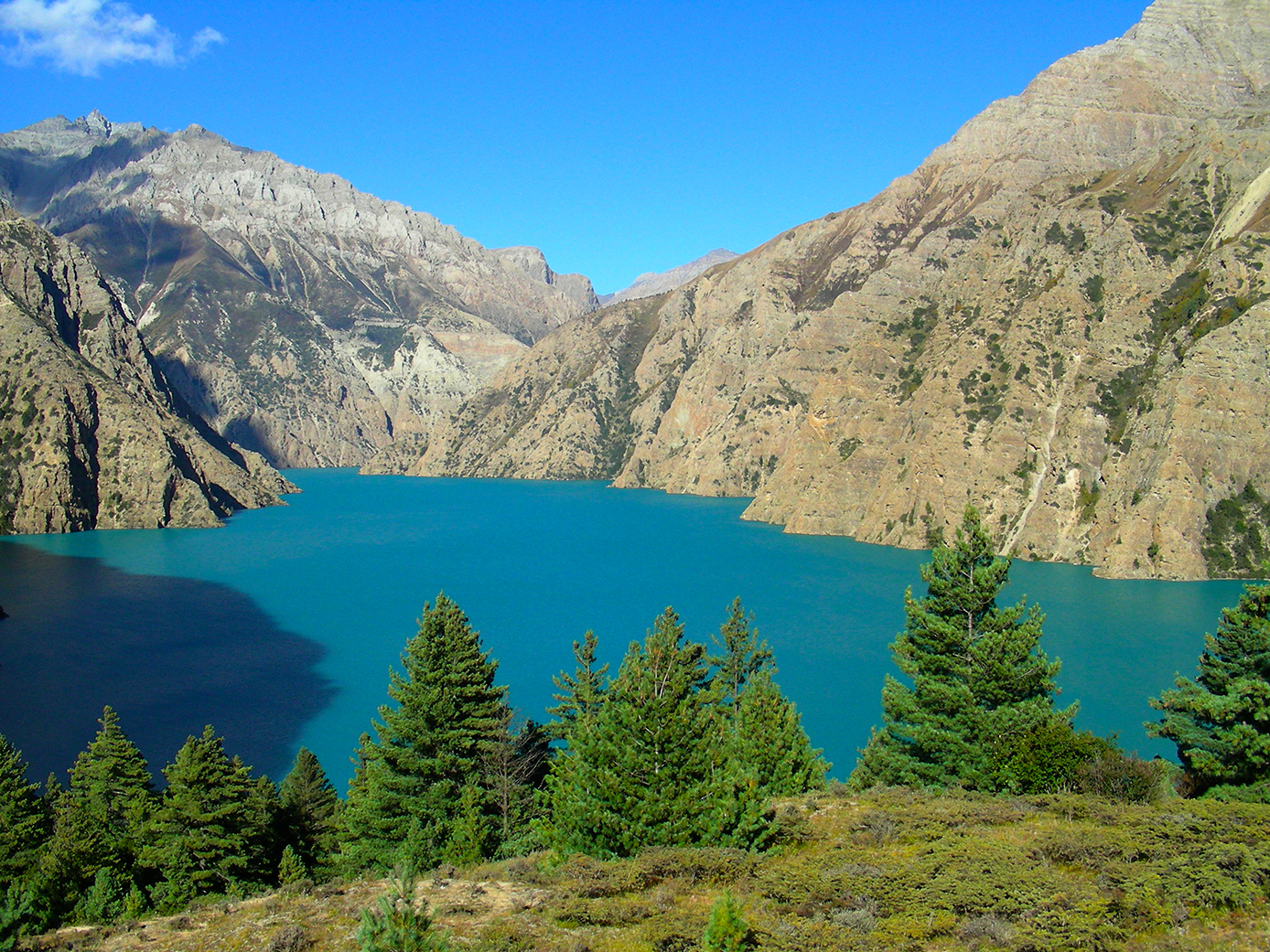
Phoksundo Lake is one of the most recognizable landscapes of Dolpo.
The color of the water changes with the light, ranging from deep blue to brilliant turquoise. Steep mountains rise around it, creating a landscape that feels almost unreal.
Nearby is Ringmo, a traditional settlement that adds another dimension to the experience.
The lake is beautiful, but the journey to reach it is what makes the place special.
You did not drive there for an afternoon visit.
You walked into it.
Every step brought you farther from the outside world.
And when you finally see the lake, you understand why people are willing to make the journey.
Nepal Tourism Board lists Phoksundo Lake, Ringmo village, monasteries and traditional cultural attractions among the highlights of Shey-Phoksundo National Park.
Beyond Phoksundo: The Deeper Wilderness
Phoksundo can be the destination for a shorter Dolpo adventure.
But for those with more time, it can also be a doorway into a much larger journey.
Beyond the lake lies the more remote world of Upper Dolpo.
This is where the landscape becomes increasingly high, dry and dramatic.
The green forests gradually disappear.
Brown and gray mountains dominate the horizon.
High passes connect isolated valleys.
Small settlements appear like islands in an enormous mountain desert.
And ancient monasteries stand quietly against the cliffs.
Upper Dolpo includes places such as Shey Gompa, Saldang and the valleys around the Crystal Mountain region.
These are not places you simply visit between flights.
They are reached through long journeys across the Himalayas.
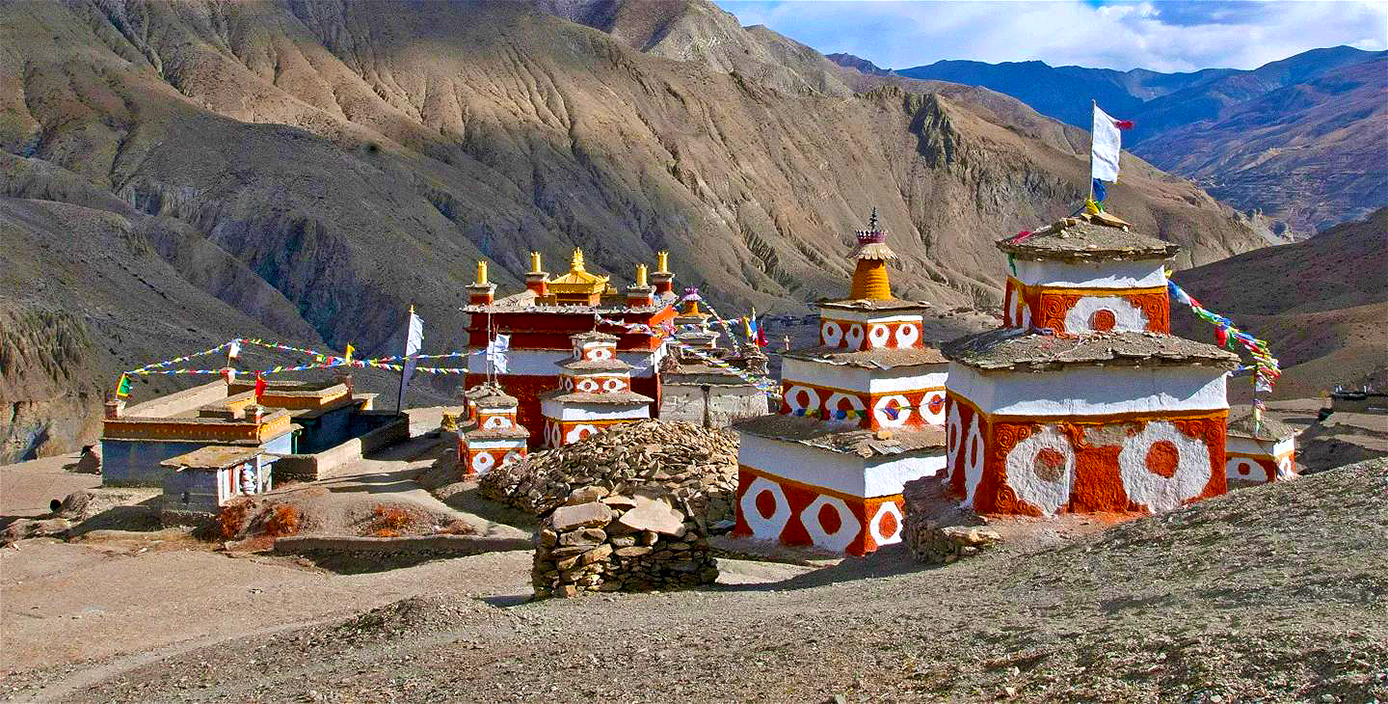
Shey Gompa: A Spiritual Heart of Upper Dolpo
Shey Gompa is one of the places that gives Upper Dolpo its distinctive character.
Surrounded by high mountains and stark alpine landscapes, the monastery represents the deep spiritual traditions of the region.
The journey to places like Shey is as important as the destination itself.
Prayer flags stretch across mountain trails.
Stone walls line sections of the path.
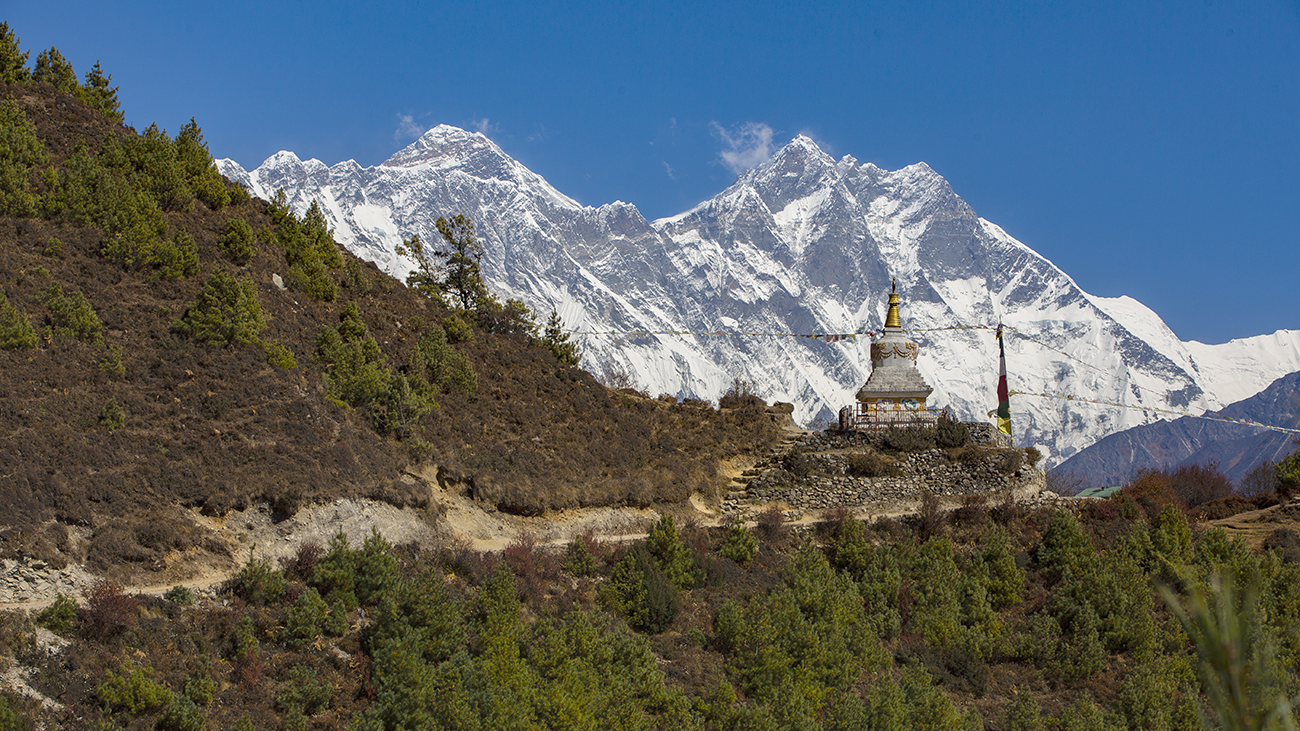
Chortens and mani walls appear along the way.
The landscape feels almost timeless.
For centuries, the people of these valleys have lived with the mountains rather than trying to conquer them.
That relationship is still visible today.
A Land Shaped by Tibetan Culture
Dolpo's location near the Tibetan Plateau has strongly influenced its culture.
Buddhist traditions are deeply visible throughout the region, while Bon traditions also form an important part of Dolpo's cultural heritage.
Villages, monasteries, prayer wheels, mani walls and chortens are not simply attractions for visitors.
They are part of everyday life.
This is one of the reasons traveling through Dolpo requires respect.
A monastery is not just a photo opportunity.
A village is not a museum.
The people you meet are not performers for tourists.
They are communities living their own lives in one of the most challenging environments on Earth.
Travel slowly.
Ask before photographing people.
Respect religious spaces.
And whenever possible, support local communities through local guides, accommodation, food and services.
Life in the Remote Villages
Perhaps the most unforgettable part of western Nepal is the people.
In the cities, it is easy to forget how different life can be when there is no highway, supermarket or reliable electricity.
In remote Dolpo, geography still determines daily life.
The seasons matter.
Water matters.
Animals matter.
Agriculture matters.
And the mountains determine when people can travel.
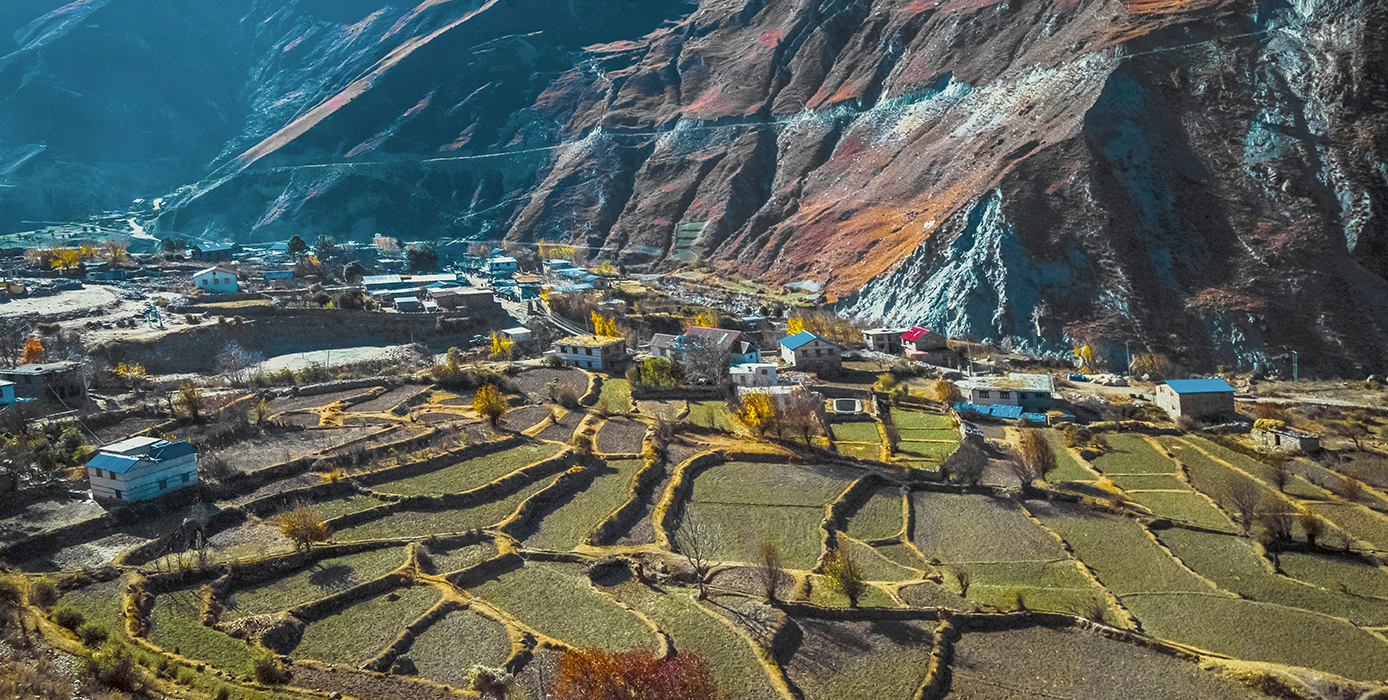
Villages can appear incredibly small against the enormous landscape.
Stone houses sit close together.
Fields occupy every possible piece of usable land.
Yaks and other livestock remain important.
People continue traditions passed down through generations.
For a visitor, seeing this way of life is a reminder that the Himalayas are not simply a destination for adventure.
They are home.
The Landscape Changes Every Day
One of the great pleasures of traveling through western Nepal is that the scenery never seems to stay the same.
You may start the day walking beside a river.
A few hours later, you are climbing through a forest.
Then the trees disappear and the landscape becomes dry and rocky.
You cross a high ridge and suddenly discover an enormous valley on the other side.
Clouds move across the mountains.
Sunlight changes the color of the cliffs.
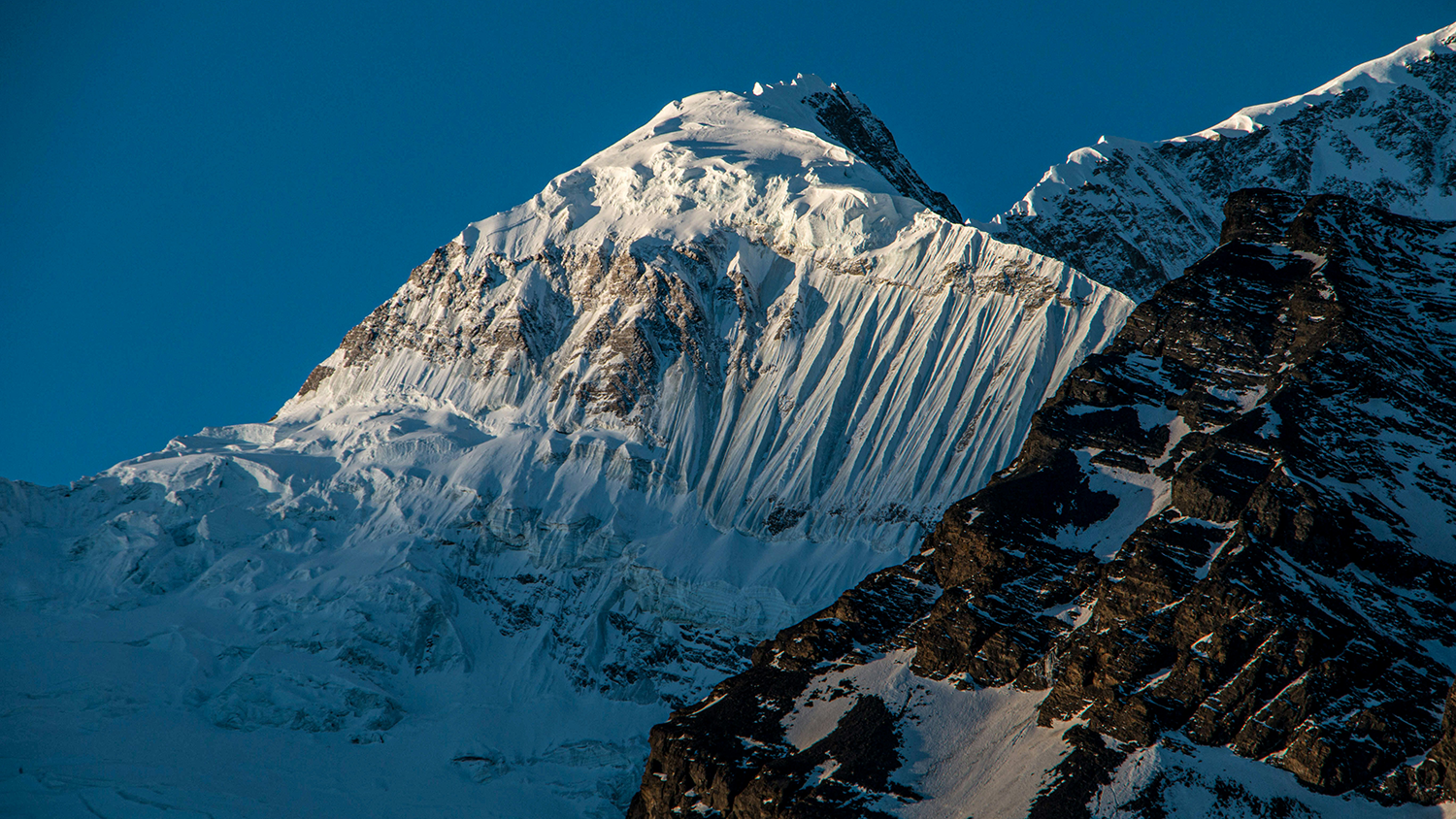
A distant snow-covered peak appears for a few minutes and then disappears again.
This is why photographs of Dolpo often fail to capture the real experience.
A photograph shows one moment.
The journey gives you hundreds of them.
Shey-Phoksundo National Park contains a remarkable range of vegetation, from pine, walnut, willow, oak and cypress at lower elevations to pine, spruce, juniper and birch at higher elevations, with increasingly arid alpine landscapes farther up.
Wildlife in Western Nepal
Dolpo is also an important area for Himalayan wildlife.
The national park supports Himalayan tahr, musk deer, ghoral, Himalayan black bear and other species. The higher regions are habitat for the elusive snow leopard. More than 200 bird species have also been recorded in the park.
Seeing wildlife is never guaranteed.
And perhaps that makes an encounter even more special.
You might see tracks in the snow rather than the animal itself.
You might hear a bird calling from a distant cliff.
Or you might simply spend a quiet morning looking across a valley and wondering what is moving somewhere beyond the ridge.
Dolpo is not a wildlife safari.
It is a wild ecosystem where humans are visitors.
How Difficult Is a Dolpo Journey?
This is an important question.
Dolpo is beautiful, but it is not an easy destination.
Depending on the route, travelers may encounter long walking days, steep terrain, high passes, cold nights and limited facilities.
Some routes require full camping support.
The national park itself lists camping as the accommodation option and describes access as involving a multi-day walk from Juphal.
Altitude also needs to be taken seriously.
A good itinerary should allow enough time for acclimatization and should not try to turn a remote Himalayan journey into a race.
The mountains do not care about your schedule.
If weather stops a flight, you may need to wait.
If a pass is difficult, you may need more time.
If your body needs another day to acclimatize, take it.
In Dolpo, flexibility is part of responsible travel.
Permits for Dolpo
Travelers should check the latest permit rules before leaving Kathmandu because requirements depend on the exact route.
Current Nepal government information distinguishes Lower Dolpa from Upper Dolpa.
The Department of Immigration currently lists Upper Dolpa at USD 500 per person for the first 10 days and USD 50 per person per day thereafter. Lower Dolpa has a separate permit structure.
Shey-Phoksundo National Park also has a separate entry fee; Nepal Tourism Board currently lists the foreigner fee at NPR 3,000 per person per entry.
Because regulations can change, these figures should be checked again when planning your trip.
For restricted areas, travelers should work with a properly licensed trekking agency and experienced local staff rather than trying to organize everything casually.
When Is the Best Time to Visit?
Weather is one of the most important factors when planning western Nepal.
Nepal Tourism Board currently lists March–May and September–October as the best seasons for Shey-Phoksundo National Park.
The ideal period can vary depending on your exact route, especially if you are crossing high passes in Upper Dolpo.
Spring brings changing landscapes and blooming vegetation at lower elevations.
Autumn generally offers clearer mountain views.
But no season completely removes the uncertainty of the Himalayas.
Mountain weather can change quickly.
That is why a good itinerary should always include some flexibility.
A spare day is not wasted in Dolpo.
It may become the day that saves your entire journey.
Lower Dolpo or Upper Dolpo?
If you are visiting Dolpo for the first time, this is one of the most important decisions.
Lower Dolpo can offer an introduction to the region, with Phoksundo Lake as its great highlight. It is still remote and demanding, but the journey can be shorter than a full Upper Dolpo expedition.
Upper Dolpo is for travelers who want to go much deeper.
It involves more time, more demanding terrain, higher passes, camping and greater logistical preparation.
Upper Dolpo is also a restricted area with a significantly higher special permit cost.
Neither is "better."
They are simply different experiences.
If Phoksundo is your dream, build the trip around the lake.
If you want the full wilderness experience, have the time, and are prepared for a demanding expedition, Upper Dolpo opens another world.
Beyond Dolpo: Why Explore Western Nepal?
Dolpo is only one part of western Nepal.
The wider western and Karnali regions contain other extraordinary destinations, including Rara, Jumla, Mugu and Humla.
Each has its own landscape and culture.
Rara is famous for its beautiful lake.
Jumla has its own distinctive mountain culture and landscapes.
Humla reaches toward the far northwestern edge of Nepal and offers another exceptionally remote Himalayan experience.
Mugu and the areas around Rara reveal a side of Nepal that receives far fewer international visitors than Everest or Annapurna.
Together, these destinations tell a bigger story.
Western Nepal is not one place.
It is an entire side of the country waiting to be explored.
Why Go Somewhere So Difficult?
Because sometimes the difficulty is the reason to go.
In an increasingly connected world, it is becoming harder to find places where you genuinely feel far away.
Dolpo still gives you that feeling.
You can walk for hours without hearing traffic.
You can spend a night in a village where the mountains completely dominate the horizon.
You can cross a pass and see nothing but ridges, valleys and sky.
You can sit beside Phoksundo Lake and realize that the journey of getting there is already becoming one of the most memorable parts of your life.
This is what Western Nepal offers.
Not luxury.
Not convenience.
Not crowds.
Experience.
A Different Definition of Adventure
Adventure does not always mean climbing the highest mountain.
Sometimes adventure means taking the road nobody recommends.
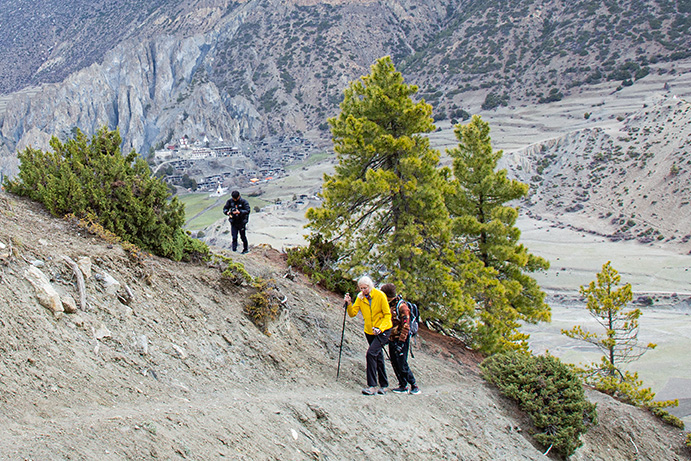
Sometimes it means flying to a small mountain airstrip, putting your backpack on, and walking into a valley where you have no idea what the next day will look like.
Sometimes it means sitting in a remote village drinking tea with someone whose life is completely different from yours.
And sometimes it simply means standing in silence.
Dolpo offers all of this.
The Nepal Most Travelers Never Meet
Nepal's famous destinations are famous for a reason.
Everest is extraordinary.
Annapurna is extraordinary.
But there is another Nepal beyond those familiar names.
A Nepal of Dolpo.
A Nepal of Phoksundo.
A Nepal of high passes and hidden valleys.
A Nepal of ancient monasteries, stone villages, yak caravans, wild rivers and enormous empty landscapes.
A Nepal where the journey can take days and where the destination is sometimes less important than everything you encounter along the way.
Western Nepal is not easy.
It is not designed for everyone.
And perhaps that is exactly why it remains so special.
So, if you are looking for the Nepal beyond the postcards, look west.
Start in Kathmandu.
Fly toward Nepalgunj.
Continue toward Juphal.
Walk toward Dunai.
Follow the trail into Dolpo.
Find Phoksundo.
And if you still want to go farther, keep walking.
Because beyond the famous trekking routes lies a Nepal that is quieter, wilder and more mysterious.
Western Nepal is not the Nepal everyone talks about.
It is the Nepal you have to go looking for.